What Happens After You File a Civil Suit in India? A Step-by-Step Guide (2026)
Quick Answer
Filing a civil suit is only the beginning of the legal process. After your plaint is filed and registered, the court generally issues summons to the defendant, who is given an opportunity to file a written statement. The court then identifies the issues in dispute, both sides present their evidence, lawyers make final arguments, and the court delivers its judgment. If the suit succeeds, the court usually draws up a decree reflecting its decision. A party dissatisfied with the outcome may have legal remedies such as an appeal, review, or revision, depending on the circumstances and the applicable law. Even after obtaining a favourable decree, you may need to begin execution proceedings to enforce it if the other side does not comply voluntarily.
Every civil suit is different. The exact procedure, timeline, and available remedies depend on the nature of the dispute, the applicable law, the court handling the case, and the facts of the case.
What Is a Civil Suit?
A civil suit is a case you file in court to protect a private right or claim, not to punish someone for a crime. It's governed mainly by the Code of Civil Procedure, 1908 (CPC), which lays down the procedure courts across India follow, though some states have their own amendments and every High Court has its own procedural rules layered on top.
Unlike criminal cases, where guilt must be proved beyond a reasonable doubt, civil cases are decided on the preponderance of probabilities. This means the court examines the evidence presented by both sides and decides which version of events is more likely to be true. The burden of proof is therefore lower than in criminal proceedings, as the court is resolving a dispute between private parties rather than determining criminal guilt.
Common types of civil suits include:
- Recovery of money (unpaid loans, dues, damages)
- Property disputes, including possession and partition
- Breach of contract
- Injunctions (asking the court to stop someone from doing something)
- Declarations (asking the court to legally confirm a right or status)
- Specific performance (forcing someone to fulfil a contract, rather than just pay damages)
Family matters like divorce or custody are civil in nature too, but they're usually governed by separate personal laws rather than the plain CPC process described here.
Right After You File: Scrutiny and Registration
When you submit your plaint, court staff first check it for defects: correct court fee, proper jurisdiction, complete documents, and correct valuation of the suit. If something is missing, you're usually given a chance to fix it. Only once the plaint clears this scrutiny does it get formally numbered and registered as a suit. In rare cases the court can return the plaint (if filed in the wrong court) or reject it outright (for example, if it discloses no valid cause of action), but a rejection doesn't stop you from filing a fresh, corrected suit later.
Interim Applications: Seeking Urgent Protection
A civil suit can take months or even years to conclude. If waiting for the final judgment could cause irreparable harm, either party may ask the court for interim relief through an Interlocutory Application (IA).
For example, if the dispute involves property and there is a risk that the defendant may sell, transfer, or damage it before the case is decided, the plaintiff can seek a temporary injunction under Order XXXIX of the Code of Civil Procedure to preserve the existing situation until the court hears the matter. In appropriate cases, the plaintiff may also seek attachment before judgment under Order XXXVIII to prevent the defendant from disposing of assets in a way that could frustrate the enforcement of a future decree.
The court grants these interim orders only when the legal requirements are satisfied. They are temporary measures intended to protect the rights of the parties while the main suit is still pending and do not determine the final outcome of the case.
Issue of Summons
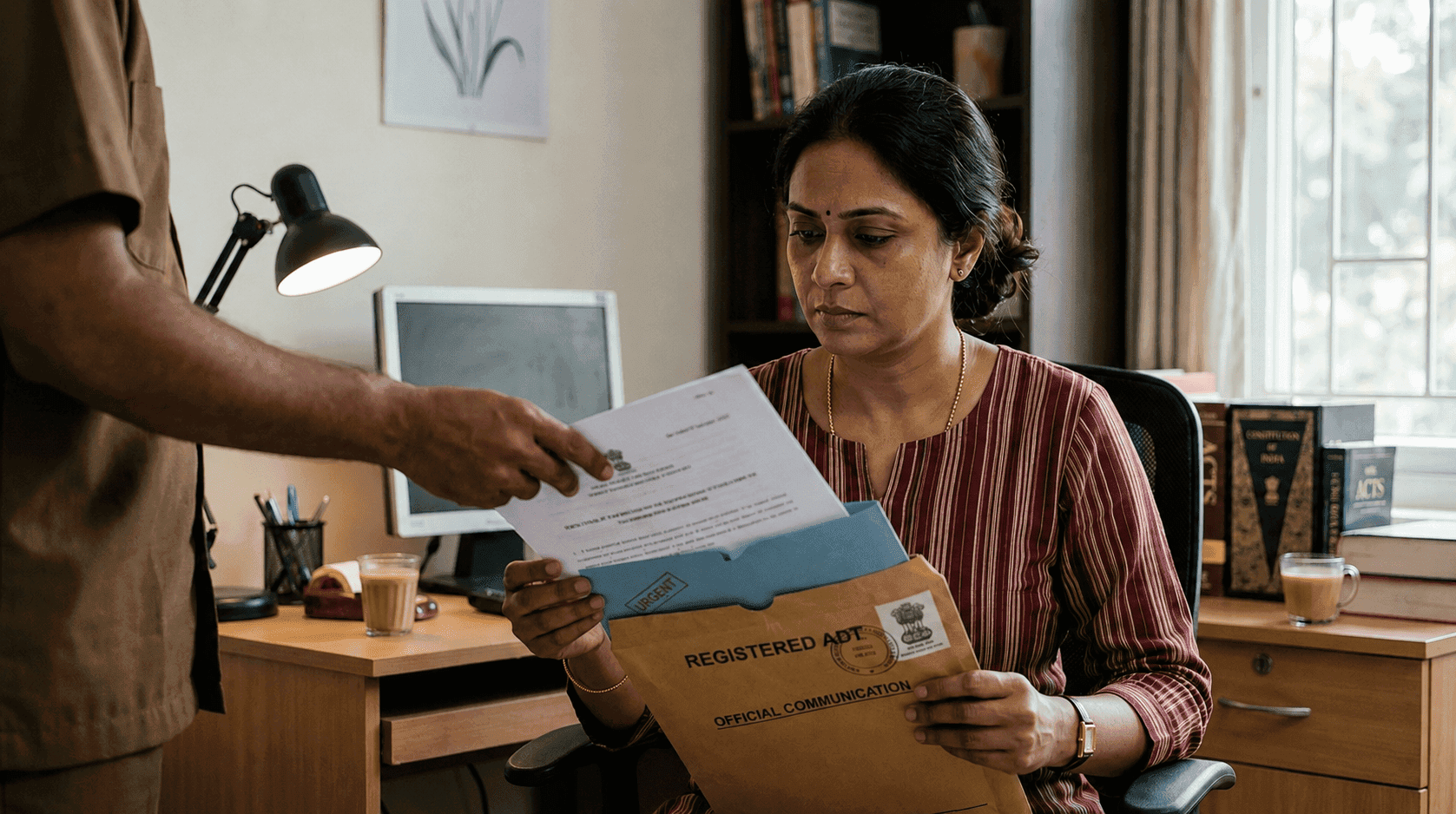
Once your suit is registered, the court sends summons to the defendant, an official notice telling them a case has been filed and that they must appear. Summons can be served by the court, by post, or increasingly through electronic means such as email or approved messaging platforms, depending on what your court permits. If a defendant is deliberately avoiding service, the court can allow "substituted service," such as pasting a copy of the summons at their last known address or publishing it in a newspaper.
If the defendant is properly served and still doesn't show up, the court can proceed ex parte, meaning it hears the case and can pass a decree without the defendant's side being heard. A defendant who later shows a genuine reason for missing the hearing can apply to have that ex parte decree set aside.
Written Statement
The defendant’s response to your plaint is called a written statement. Under Order VIII Rule 1 of the Code of Civil Procedure, the defendant is ordinarily required to file it within 30 days of receiving the summons. In ordinary civil suits, the court may extend this period, but generally not beyond 90 days, depending on the facts of the case and applicable judicial principles.
For commercial disputes governed by the Commercial Courts Act, 2015, the rule is much stricter. The written statement must be filed within 120 days from the date of service of summons. After this period expires, the defendant loses the right to file the written statement, and the court cannot extend the deadline.
The written statement must specifically admit or deny each allegation made in the plaint. The defendant may also raise a counterclaim against the plaintiff or claim a set-off where permitted by law. If the defendant fails to file a written statement despite being given the opportunity, the court may proceed with the suit based on the available material on record.
Interim Applications: Getting Relief While the Case Is Pending
Not every suit needs these, but many do, especially where there's a risk of harm before the trial finishes:
- Temporary injunction - an order stopping someone from doing something (like selling disputed property) until the case is decided
- Status quo order - freezing the current situation
- Appointment of a receiver or commissioner - to manage property or inspect a site during the case
- Attachment before judgment - securing property so it can't be disposed of if you're worried the other side will move assets
You, or the other side, can also apply to amend pleadings, add or remove parties, or seek discovery of documents the other side is holding.
Framing of Issues
Before evidence begins, the judge identifies the specific points the parties actually disagree on, called issues. These fall into issues of fact and issues of law. This step matters because it decides who has to prove what: whoever alleges a fact generally carries the burden of proof on that issue.
Evidence Stage
Each side presents evidence to support their case: witness testimony, cross-examination, and documents. Since 1 July 2024, the Bharatiya Sakshya Adhiniyam, 2023 (BSA) has replaced the old Indian Evidence Act and now governs what counts as admissible evidence, including in civil suits. Under the BSA, electronic records such as emails, WhatsApp messages, or digital documents are treated as documents in their own right, but they generally still need a proper certificate confirming their authenticity to be relied on in court.
Final Arguments
Once evidence is complete, lawyers for both sides summarise their case and the law that supports it, sometimes through written submissions as well as oral arguments. The judge uses this stage to test both sides' reasoning before deciding the case.
Judgment and Decree
The judgment is the court's reasoned decision explaining who wins, on what grounds, and what relief is granted. The decree is the formal, operative order that follows the judgment, it's the actual document that spells out what each party must do. This distinction matters because it's the decree, not the judgment, that gets enforced later. A case can also end in a partial win, where you get some but not all of what you asked for.
After the Judgment: Appeal, Review, or Revision
These three remedies sound similar but are not interchangeable:
- Appeal - asking a higher court to reconsider the decision. For most suits, an appeal to a District Court must generally be filed within 30 days, and to a High Court within 90 days of the decree, though this can vary by case type. Missing this window usually means also applying for condonation of delay.
- Review - asking the same court to look at its own decision again, allowed only in narrow situations, such as when important new evidence has come to light that couldn't have been found earlier, or where there's an obvious error visible on the face of the record.
- Revision - a power the High Court can use, on its own or on request, to correct a subordinate court's decision where that court acted without jurisdiction, failed to use jurisdiction it had, or acted illegally, usually in matters where no appeal is otherwise available.
Execution Proceedings
Winning your case doesn't automatically hand you the money or property awarded. If the other side doesn't comply voluntarily, you (the decree-holder) must file an execution petition asking the court to enforce the decree against the judgment-debtor. Depending on the nature of the decree, execution can involve attaching and selling the debtor's property, recovering money directly, handing over possession of property, or, in limited and closely regulated circumstances, arrest for wilful non-compliance. Execution is entirely dependent on what the decree actually says, so it's worth reading your decree carefully before this stage.
How Long Does a Civil Suit Take?
There's no honest single answer to this. Duration depends on the court's pending caseload, how many interim applications are filed, how many witnesses are involved, how complex the facts are, whether either side appeals, and simple things like how often hearings get adjourned. Some suits resolve in under two years; others, especially property matters with multiple parties or expert evidence, can take considerably longer. Treat any source that promises a fixed timeline with caution.
Who Does What
- Plaintiff - the person who filed the suit and must prove their claim
- Defendant - the person being sued, who must respond and defend
- Advocate - represents and argues for their client, drafts pleadings and applications
- Judge - decides procedural questions, frames issues, and delivers judgment
- Court registry/staff - manage filing, scrutiny, and case records
- Commissioner (where appointed) - carries out specific tasks the court assigns, like a site inspection
Documents You'll Likely Need
Requirements differ by case type, but commonly needed documents include the plaint and written statement, identity proof, property or ownership documents, contracts or agreements, receipts, legal notices already exchanged, and any relevant photographs, emails, or messages. Keep both physical and digital copies organised as the case proceeds.
Court Fees
Court fees in India are largely governed by state-specific Court Fees Acts, so the exact amount depends on your state, the type of relief you're seeking, and the value you've assigned to your suit. Because these fee structures are revised periodically, it's best to confirm the current fee with your court or advocate rather than relying on any fixed figure you find online.
Common Mistakes Litigants Make
- Missing hearing dates without informing the court
- Not producing key documents on time
- Ignoring summons rather than responding
- Assuming a favourable judgment automatically means getting possession or payment
- Not following through with execution once the decree is passed
- Waiting too long to act on an interim order
Key Takeaways
Filing your suit is the beginning of a structured, multi-stage process: summons, written statement, interim relief where needed, framing of issues, evidence, arguments, judgment, decree, and, if necessary, appeal and execution. Timelines vary by court and case, and every case is shaped by its own facts, so treat this as a general roadmap rather than a guarantee of how your specific case will unfold.
How Court Click Can Help
Once your civil suit is filed, keeping track of every hearing, order, and update can become difficult, especially if your case spans months or even years. Missing a hearing date or waiting for updates from multiple sources can add unnecessary stress.
Court Click helps you stay on top of your case by bringing everything together in one place. You can track hearing dates, receive instant notifications whenever your case is listed or updated, view your complete case history, and access orders and judgments as soon as they become available.
If you need a Certified True Copy (CTC) of a court order or judgment? You can apply for it directly through the app and have it delivered to your doorstep, eliminating the need to visit the court for the application process.
Whether you’re a litigant following your own case or a family member staying informed, Court Click makes it easier to monitor your case from anywhere. While your advocate continues to handle the legal proceedings, Court Click helps ensure you never miss an important update.
Frequently Asked Questions
1. What happens after filing a civil suit in India? After filing, the court scrutinises and registers your plaint, issues summons to the defendant, and the case then proceeds through written statement, framing of issues, evidence, arguments, judgment, and decree.
2. How long does a civil suit take in India? It varies widely based on the court, case complexity, and number of parties or witnesses involved. There's no fixed or guaranteed timeline.
3. What is a written statement? It's the defendant's formal reply to the plaint, admitting or denying the allegations and raising any defences, counterclaims, or set-offs.
4. What happens if the defendant doesn't appear in court? If summons was properly served and the defendant still doesn't appear, the court can proceed ex parte and may pass a decree without hearing their side.
5. Can a civil suit be settled outside court? Yes, parties can settle at almost any stage, including through mediation or Lok Adalats, and the court can record the settlement.
6. What is an ex parte decree? It's a decree passed when one party, usually the defendant, fails to appear despite being properly served with notice.
7. Can I submit new documents after filing my suit? Generally, you should file or disclose all documents you rely on along with your plaint (if you’re the plaintiff) or your written statement (if you’re the defendant). If you discover or need to rely on additional documents later, the court may allow them to be produced, but only with its permission and if there is sufficient justification for the delay.
8. What is framing of issues? It's when the judge identifies the specific factual and legal points the parties disagree on, which then guides the evidence stage.
9. What is execution of a decree? It's the legal process of enforcing a court's decree when the losing party doesn't comply voluntarily, such as by attaching property or recovering money owed.
10. Can I appeal if I lose my case? In most cases, yes, subject to limitation periods (commonly 30 days to a District Court or 90 days to a High Court) and whether the specific type of order or decree is appealable.
11. What's the difference between review and revision? Review is when the same court reconsiders its own decision in limited circumstances. Revision is a power exercised by the High Court to correct jurisdictional errors made by a subordinate court.
12. Can I appear in court without a lawyer? Yes, litigants are legally allowed to represent themselves, though civil procedure can be technical, so most people choose to engage an advocate.
13. Who pays the court fees? The plaintiff is generally required to pay the prescribed court fees when filing the plaint. At the end of the case, the court may also decide which party should bear the costs of the litigation, depending on the outcome and the circumstances of the case.
14. How do I know my next hearing date? You can use a case-tracking app like Court Click to receive updates and track your case more conveniently.
Disclaimer: This article is for general informational purposes only and does not constitute legal advice. Civil suit procedures can vary based on the applicable law, the specific court, state amendments, High Court rules, and the facts of your case. Please consult a qualified advocate for advice on your specific matter.