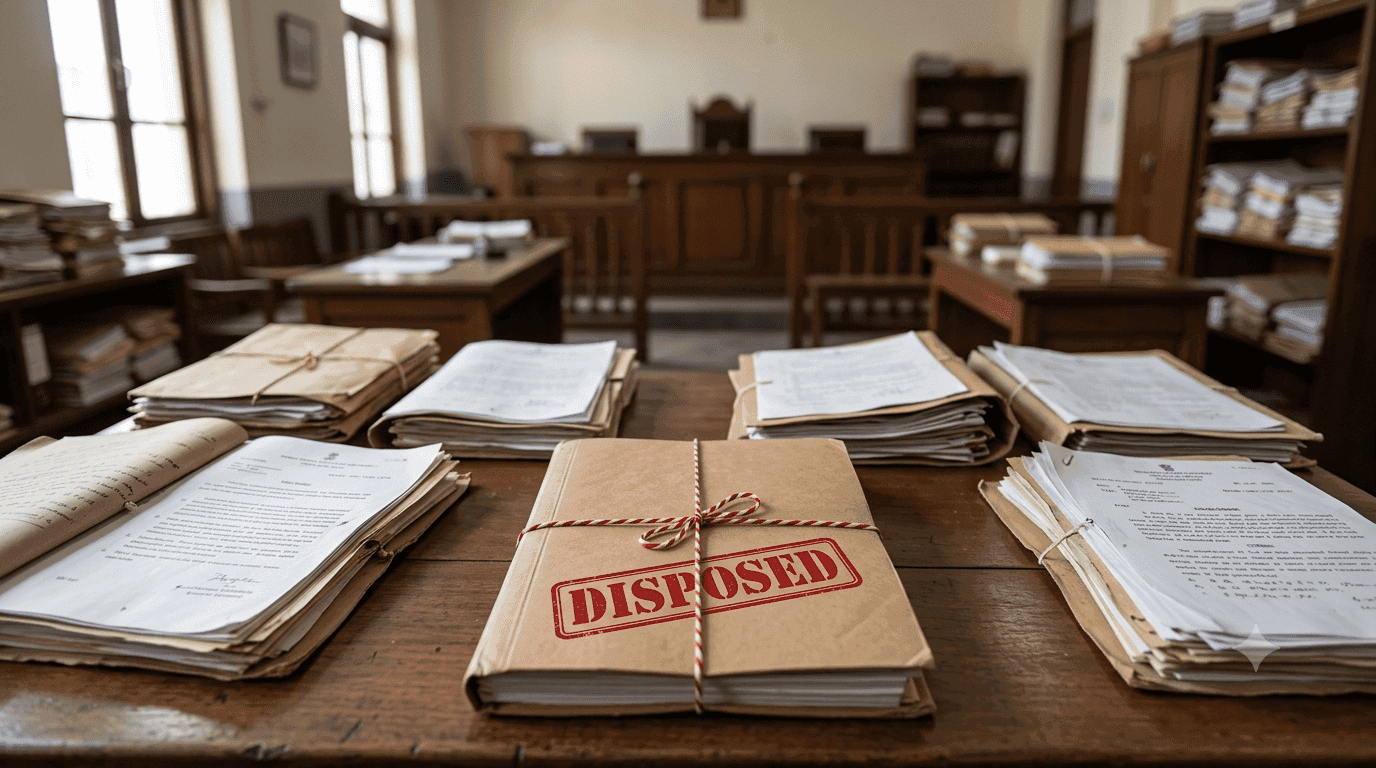
What Does Case Status "Case Disposed" Mean? An Easy Guide for Litigants
You checked your case status online. You see two words: Case Disposed.
For most people, that word raises more questions than it answers. Did the case end? Did someone win? Was it thrown out? Is it over for good?
This guide explains exactly what "Case Disposed" means in Indian court records, what it does not mean, and what you should do next.
What Does "Case Disposed" Mean in Court?
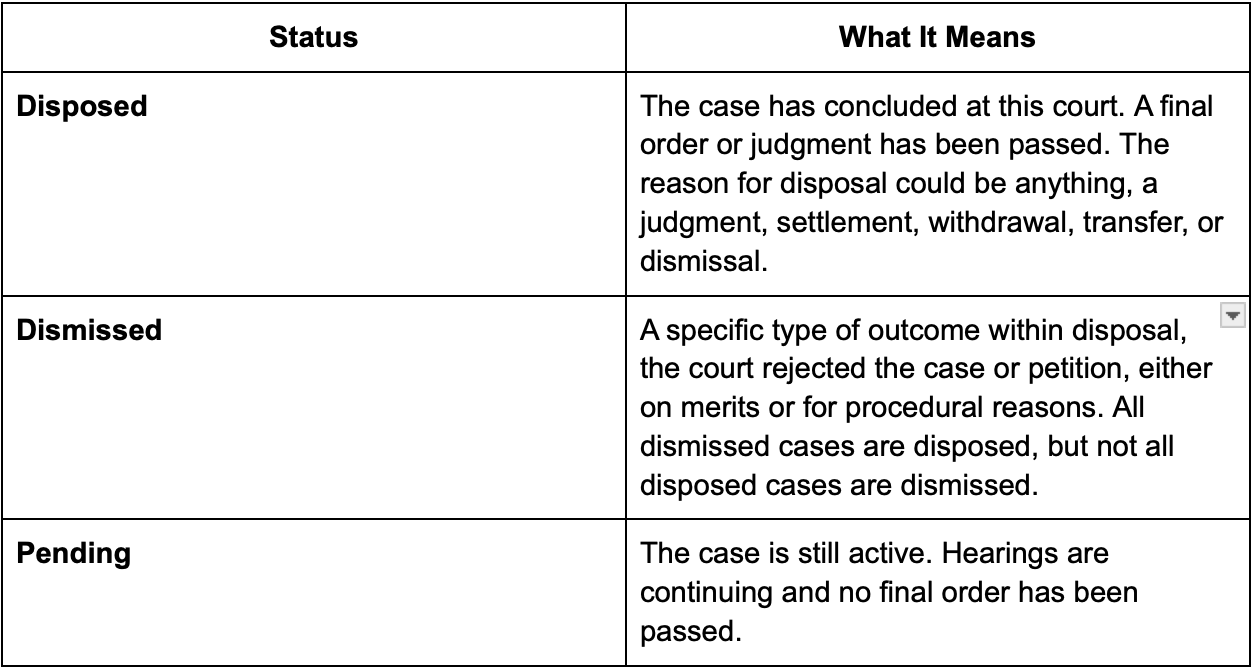
In Indian court terminology, disposed simply means the proceedings in that case have concluded at that level of court. The court has passed a final order or judgment and removed the matter from its active list.
The words disposed, disposal, and disposition are used interchangeably across different court portals and case management systems. They all carry the same meaning: the case is no longer pending before that court.
Disposal is a procedural label. It tells you the stage the case has reached, not which party prevailed.
What Disposed Does NOT Mean
This is the most important thing to understand, and it is where most litigants get confused.
Disposed does not automatically mean you won. Disposed does not automatically mean you lost. Disposed does not mean the case was thrown out.
The status "Disposed" tells you the case has been concluded. It tells you nothing about the outcome. A case decided entirely in your favour is marked disposed. A case decided entirely against you is also marked disposed. So is a case that was settled by mutual agreement, or one that was dismissed on a technicality.
The only way to know the actual outcome is to read the final order or judgment, not to guess from the status label alone.
How Can a Case Be Disposed? Different Ways It Happens
A case can be disposed of in several different ways. The most common include:
Judgment on merits. The court hears both sides, examines evidence, and passes a final judgment. This is the most complete form of disposal. The court decides who succeeds and who fails.
Dismissal for default or non-prosecution. If the party who filed the case fails to appear or take steps, the court may dismiss it for non-prosecution or default. The case is disposed, but the underlying claim has not been decided on its facts.
Disposal by settlement or compromise. In civil, matrimonial, and consumer matters, parties sometimes reach an agreement. The court records the settlement and disposes of the case. This is a disposal, but neither party "won" in the traditional sense, both agreed to an outcome.
Withdrawal. A party may withdraw their case. The court allows the withdrawal and marks it disposed.
Transfer. If a court transfers a case to another court, it may mark the matter disposed at its end. The case continues elsewhere.
Abatement. In certain situations, such as the death of a party without substitution of legal heirs within the prescribed time, a case can abate and be marked disposed.
Dismissed in limine. Some petitions are dismissed at the threshold without going into the merits, for example, if the court finds there is no legal basis to admit the petition at all.
Because disposal happens in so many different ways, you cannot draw any conclusion about the outcome just from seeing the word "Disposed." You must check the actual order.
Disposed vs. Dismissed vs. Pending, What's the Difference?
These terms often confuse litigants. Here is a clear comparison:
How to Find Out What Actually Happened
Once you see "Disposed" on the case status portal, your next step is to find out why it was disposed and what the court decided.
Check the final order or judgment. This is the most important document. It will state clearly what the court decided and why.
Apply for a Certified True Copy (CTC). you might need the official court-sealed and stamped version of the final order or judgment for future official and legal purposes, you can apply for a Certified True Copy (CTC) through Court Click.
Speak to your advocate. you are represented by an advocate, contact them as soon as possible. They can explain the outcome of the case, advise you on any next steps, and help you understand whether an appeal or any other legal remedy may be available.
Do not rely on the status label alone. The word “Disposed” only tells you that the court has concluded the case. It does not tell you whether you won, lost, settled the matter, or whether any further action is required. Always read the final order or judgment before drawing any conclusions.
Can a Disposed Case Continue? Appeals and Other Remedies
Disposal at one court does not necessarily mean the matter is permanently over. Indian law provides several avenues to challenge or continue a disposed matter.
Appeal. If you are dissatisfied with a judgment, you may generally file an appeal before the appropriate higher court, for example, from a district court to the High Court, or from the High Court to the Supreme Court. Appeals must be filed within the time limits prescribed under the Limitation Act, 1963, so timing is critical.
Revision. In certain cases under the Code of Civil Procedure and the Code of Criminal Procedure (now the Bharatiya Nagarik Suraksha Sanhita, 2023), a revision petition can be filed before a higher court to correct jurisdictional or legal errors.
Review petition. A party may apply to the same court that passed the order to review it, in limited circumstances prescribed by law.
Restoration application. If a case was dismissed for non-prosecution or default (not on merits), it may sometimes be possible to file an application to restore it, subject to satisfying the court of sufficient cause for the non-appearance.
Not every disposed case can or should be challenged. Whether a remedy is available depends on the nature of the order, the time that has passed, and the specific facts of your case. Consult an advocate before assuming you can or cannot proceed further.
How Court Click Can Help After Disposal
Keeping track of court developments , especially in the period leading up to disposal, can be overwhelming. Court Click is designed to make this easier.
Get Notified When Orders and Judgments Are Uploaded
Instead of manually checking websites, Court Click notifies you when a final order or judgment becomes available, helping you stay updated without repeated follow-ups.
Access Case Information in One Place
Hearing dates, case history, orders, and judgments can be viewed from a single platform, making it easier to understand the progress and outcome of your case.
Apply for a Certified True Copy (CTC)
If you require an official Certified True Copy of a judgment or order for an appeal, property matter, compliance requirement, or any other purpose, you can apply through Court Click. Once processed, the document can be delivered to your doorstep or provided as an eCopy.
Stay Prepared for the Next Step
Whether you need to understand a judgment, obtain a Certified True Copy, or discuss further legal options with your advocate, having timely access to court documents can make a significant difference.
For litigants managing cases in India, Court Click simplifies the process of staying informed after disposal, without the need for constant manual checking or repeated follow-ups.
Frequently Asked Questions
What does case status "Disposed" mean? It means the court has concluded the case and passed a final order or judgment. The matter is no longer pending before that court.
Does disposed mean I won? No. Disposed only tells you the case has ended. It does not tell you who won. You need to read the final order to know the outcome.
Does disposed mean I lost? No, not necessarily. A case decided in your favour is also marked disposed. The status label alone does not indicate success or failure.
What is the difference between disposed and dismissed? Dismissed means the court rejected the case or petition. Disposed is a broader term covering all types of case conclusions, including judgments, settlements, withdrawals, and dismissals.
What is the difference between disposed and pending? A pending case is still active, hearings are ongoing and no final order has been passed. A disposed case has concluded at that court level.
Can I appeal after my case is disposed? In most situations, yes, provided you file the appeal within the prescribed time limit. The time limit for appeals is governed by the Limitation Act, 1963, and varies depending on the type of case and the court. Consult an advocate promptly.
Can Court Click notify me when the judgment is uploaded? Yes. Court Click can alert you as soon as a judgment or order from your case is uploaded to the court portal, so you know the moment it becomes available.
This article is for general information only and does not constitute legal advice. For advice specific to your situation, please consult a qualified advocate.