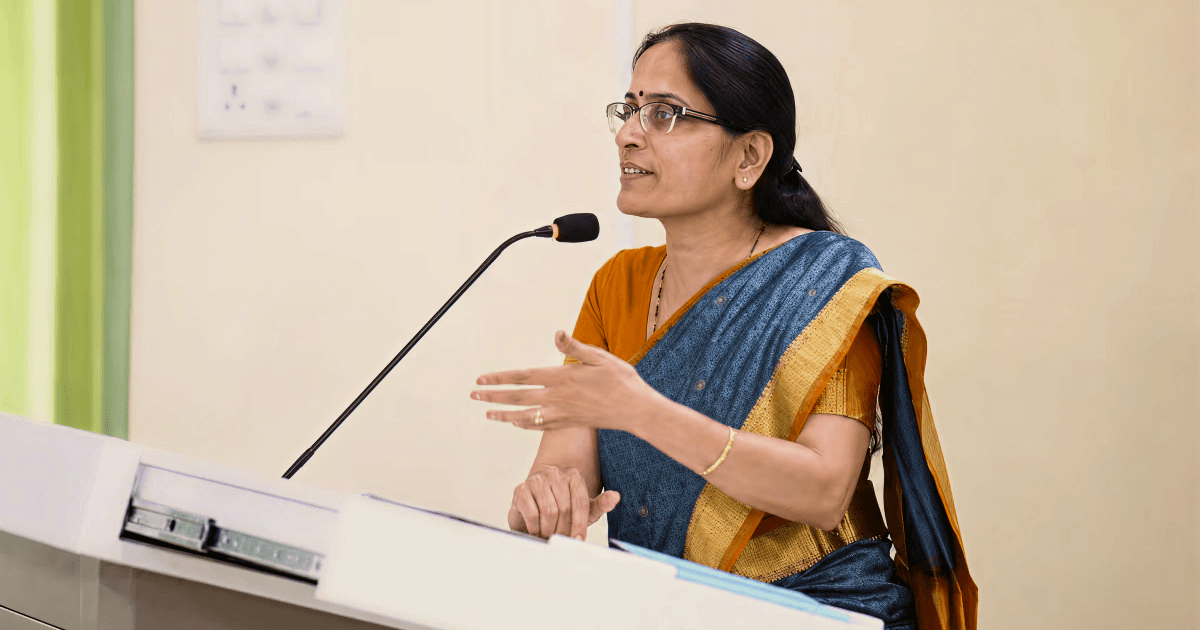
Justice V. Mohana: The Second Woman Ever Elevated Directly to the Supreme Court of India
Why Is Everyone Talking About Justice V. Mohana?
On June 2, 2026, V. Mohana was appointed as a Judge of the Supreme Court of India. In doing so, she became only the second woman in the country’s history to be elevated directly from the Bar to the Supreme Court.
Her appointment is remarkable not just because she has joined India’s highest court, but because of the path she took to get there. Most Supreme Court judges spend years serving on High Courts before being elevated. Justice V. Mohana took a far rarer route, from practicing advocate to Supreme Court judge.
In the Supreme Court’s 76-year history, only 11 judges have been elevated directly from the Bar. Justice V. Mohana is one of them, making her appointment one of the most significant judicial developments of 2026.
So who is Justice V. Mohana, and how did she reach one of the most powerful positions in the Indian judiciary?
Who Is Justice V. Mohana?
Justice V. Mohana is a Senior Advocate who spent decades practicing before the Supreme Court of India, the Delhi High Court, and various other courts and tribunals. A first-generation lawyer from Coimbatore, Tamil Nadu, she built her career from the ground up, with no family connections to the law and no established network to lean on.
She graduated from Coimbatore Law College (now Government Law College, Coimbatore) in 1988 as part of India's very first batch of the five-year integrated B.A. LL.B. programme. She cleared the Supreme Court's Advocate-on-Record (AOR) examination in 1996 and went on to practice independently at the apex court. In 2015, the Supreme Court designated her a Senior Advocate, one of the highest distinctions in the Indian legal profession.
On May, 2026, the Supreme Court Collegium recommended her elevation to the bench. Less than a week later, the Central Government formally notified her appointment, effective On June 2, 2026. She is now Justice V. Mohana, a judge of the Supreme Court of India.
Why Is Her Appointment Historic?
The numbers tell the story plainly.
Since the Supreme Court was established on January 26, 1950, a total of 284 judges have served on its bench, including the 32 currently sitting. Of those 284, only 10 were elevated directly from the Bar. That is just 3.5% of all Supreme Court judges in India's history.
Justice V. Mohana is the 11th person to take that rare path, and only the second woman to have done so. The first was Justice Indu Malhotra in 2018.
Beyond that milestone, her appointment ended a five-year drought in the representation of women on India's highest court. The last time a woman was appointed to the Supreme Court was in 2021. Four successive Chief Justices of India, Justices UU Lalit, DY Chandrachud, Sanjiv Khanna, and BR Gavai, had completed their tenures without elevating a single woman to the bench. Justice V. Mohana becomes the 12th woman judge in the Supreme Court's history.
She is expected to serve until June 2031, giving her a tenure of nearly five years.
How Did V. Mohana Reach the Supreme Court?
What Does "Direct Elevation from the Bar" Mean?
Most Supreme Court judges spend years, often decades, serving as judges in High Courts before being considered for the apex court. It is a long, institutional ladder.
"Direct elevation from the Bar" means skipping that ladder entirely. It refers to the appointment of a practicing advocate, someone who has been arguing cases as a lawyer, not presiding over them as a judge, directly to the Supreme Court bench.
This is permitted under Article 124(3)(c) of the Constitution of India, which allows advocates with at least ten years of experience before High Courts to be appointed as Supreme Court judges. But the provision is rarely used. In over seven decades of the Supreme Court's existence, it has been invoked for only 11 individuals, including Justice V. Mohana.
Her Career Path
Mohana enrolled with the Bar Council after graduating in 1988 and began her career in Coimbatore under the mentorship of advocate M. Panchapakesan, where she was the only woman lawyer in chambers.
In 1992, she relocated to New Delhi, a defining move. She worked with then-advocate Indu Malhotra at the Supreme Court level. After a year, she joined the chambers of Senior Advocate CS Vaidyanathan.
In 1996, she cleared the demanding Advocate-on-Record examination, which allows advocates to directly file cases before the Supreme Court on behalf of clients. She has since practiced independently at the Supreme Court, the Delhi High Court, and various courts and tribunals in New Delhi.
The Legal Legends Who Shaped Her Career
Two names stand out in Justice V. Mohana's professional formation.
M. Panchapakesan, the Coimbatore advocate who first took her in, provided the foundation for her long career.
Indu Malhotra, who would go on to become the first woman elevated directly from the Bar to the Supreme Court bench in 2018, was the mentor with whom Mohana worked closely in the early 1990s in New Delhi. At the time, both were simply advocates working the same courts. Over three decades later, the student followed the teacher's historic path.
The Cases That Defined Justice V. Mohana
Over her decades at the Bar, Justice V. Mohana appeared in several significant cases before the Supreme Court. Verified by her profile in multiple legal publications, these include:
- Permanent Commission for women in the armed forces: litigation that sought equal career rights for women officers in India's military.
- Senior citizens' property rights: cases concerning the legal protections available to elderly property owners.
- The Karnataka hijab ban case: one of the most prominent and publicly debated constitutional matters of recent years (the 2022 Karnataka hijab row).
- National Judicial Appointments Commission (NJAC): She notably represented the Union of India in this landmark 2015 constitutional case.
She also went before the Supreme Court as a petitioner in her own right, challenging the court's criteria for allotting lawyers' chambers, which she argued was arbitrary given the cut-off date prescribed. The court ultimately modified the cut-off date in her favor, an outcome demonstrating her willingness to use legal process even when the institution itself was the respondent.
Before Justice V. Mohana, There Was Justice Indu Malhotra
Justice Indu Malhotra made history in 2018 when she became the first woman ever to be elevated directly from the Bar to the Supreme Court bench. Before that appointment, she had been a practicing Senior Advocate with decades of experience.
Justice V. Mohana worked alongside Justice Malhotra in the early 1990s, when both were advocates at the Supreme Court. That professional relationship, a young lawyer learning from a more experienced one, took on a new dimension when Malhotra became a Supreme Court judge. Now, over three decades later, Mohana has followed the same rare path, becoming the second woman to do so.
Their shared distinction, both first-generation lawyers, both women who made it to India's highest court without the High Court route, is unprecedented. No two women had previously shared the distinction of direct elevation from the Bar in the Supreme Court's history.
Why This Appointment Matters Beyond One Individual
Representation at the highest levels of the judiciary sends a signal, not just a statistic.
As Bar and Bench noted, only 11 women have ever held a seat on the Supreme Court bench in 76 years. Currently, with Justice V. Mohana's addition, there are now two women judges on a bench of over 30, a small number, but a marked change from the single-woman bench that existed until June 2026.
Justice B.V. Nagarathna, the one woman on the bench before Mohana's appointment, is slated to become the first woman Chief Justice of India, another landmark that lies ahead.
The legal profession in India has, for much of its history, been described as an unequal space for women, with barriers not just at entry but throughout careers. Women's participation as lawyers has grown in the last decade, but their representation on constitutional courts has lagged significantly behind. Against that backdrop, Justice V. Mohana's appointment, as a first-generation lawyer, a woman from outside the judicial system, elevated on the strength of her courtroom record, carries meaning well beyond a single notification in the official gazette.
Quick Facts About Justice V. Mohana
- Full designation: Justice V. Mohana, Judge of the Supreme Court of India
- Law degree: B.A. LL.B., Coimbatore Law College (now GLC, Coimbatore), 1988, India's first batch of the five-year law programme
- Relocated to Delhi: 1992
- AOR qualification: 1996 (Advocate-on-Record, Supreme Court of India)
- Designated Senior Advocate: 2015, by the Supreme Court of India
- Collegium recommendation: May 2026
- Government notification of appointment: June 1, 2026
- Expected retirement: June 2031 (tenure of approximately five years)
- Historic distinction: Only the 11th person, and second woman, to be elevated directly from the Bar to the Supreme Court of India
- Mentor: Justice Indu Malhotra (the first woman elevated directly from the Bar)
Frequently Asked Questions About Justice V. Mohana
Who is Justice V. Mohana?
Justice V. Mohana is a judge of the Supreme Court of India, appointed on June 2, 2026. She was previously a Senior Advocate with decades of experience practicing before the Supreme Court and other courts in India. She is the 11th person in the Supreme Court's history to be elevated directly from the Bar, and only the second woman to achieve this distinction.
What is "direct elevation from the Bar"?
Direct elevation from the Bar means that a practicing lawyer is appointed directly to the Supreme Court without having first served as a High Court judge. It is permitted under Article 124(3)(c) of the Indian Constitution but has been used only 11 times in over 76 years of the Supreme Court's existence.
Why is Justice V. Mohana's appointment historic?
She is only the 12th woman ever to serve on the Supreme Court of India, and only the second woman (after Justice Indu Malhotra in 2018) to have been elevated directly from the Bar. Her appointment also ended a five-year gap in women's representation on the Supreme Court.
What is Justice V. Mohana's connection to Justice Indu Malhotra?
Justice V. Mohana worked with Justice Indu Malhotra in the early 1990s, when both were practicing advocates at the Supreme Court. Malhotra became the first woman elevated directly from the Bar to the Supreme Court in 2018. Mohana has now followed the same path, making them the only two women in Indian history to share this distinction.
When was V. Mohana designated a Senior Advocate?
V. Mohana was designated a Senior Advocate by the Supreme Court of India in 2015.
How long will Justice V. Mohana serve on the Supreme Court?
Based on available reports, Justice V. Mohana is expected to serve until June 2031, giving her a tenure of approximately five years on the Supreme Court bench.
Which notable cases did V. Mohana argue?
Verified sources indicate she appeared in cases concerning permanent commission for women in the armed forces, senior citizens' property rights, and the Karnataka hijab ban case, among others.
Final Thoughts
Justice V. Mohana's appointment to the Supreme Court of India is significant not only because of who she is, but because of the path she took to get there.
After more than three decades at the Bar, she became only the second woman in India's history to be elevated directly from the Bar to the Supreme Court, a distinction shared only with her former mentor, Justice Indu Malhotra.
Her journey from a young lawyer in Coimbatore to one of the highest judicial offices in the country reflects the impact of experience, perseverance, and excellence in advocacy. At a time when conversations around representation in the judiciary continue to grow, her appointment marks an important moment for both the legal profession and the Supreme Court itself.
For aspiring lawyers, particularly women entering the profession, Justice V. Mohana's story serves as a reminder that there is more than one path to India's highest court.